Photo credit: Mother Tree Project & Program
This research brief summarizes research findings from the peer-reviewed article published in February 2026 in the Canadian Journal of Forest Research.
From Paper: Effects of fuel reduction thinning and patch clearcutting on carbon stocks and plant diversity in south coastal rainforests of British Columbia
Authors: Suzanne Simard, Jean Roach, Erin Miller and Heather Beresford
Wildfires are increasing in size and severity in North America, with BC experiencing record-breaking wildfires over the past decade – 2.84 million hectares of forest burned in 2023 alone, ten-times the 20-year average. These fires are a severe threat to communities and human lives, especially in the wildland-urban interface (WUI). Wildfires also contribute significantly to annual green house gas emissions and reduce the amount of carbon stored in forests, as well as reduce habitat availability for a variety of species. Managing the effects of wildfires requires active and adaptive mitigation strategies, that need to be balanced with other ecosystem services that forests provide.
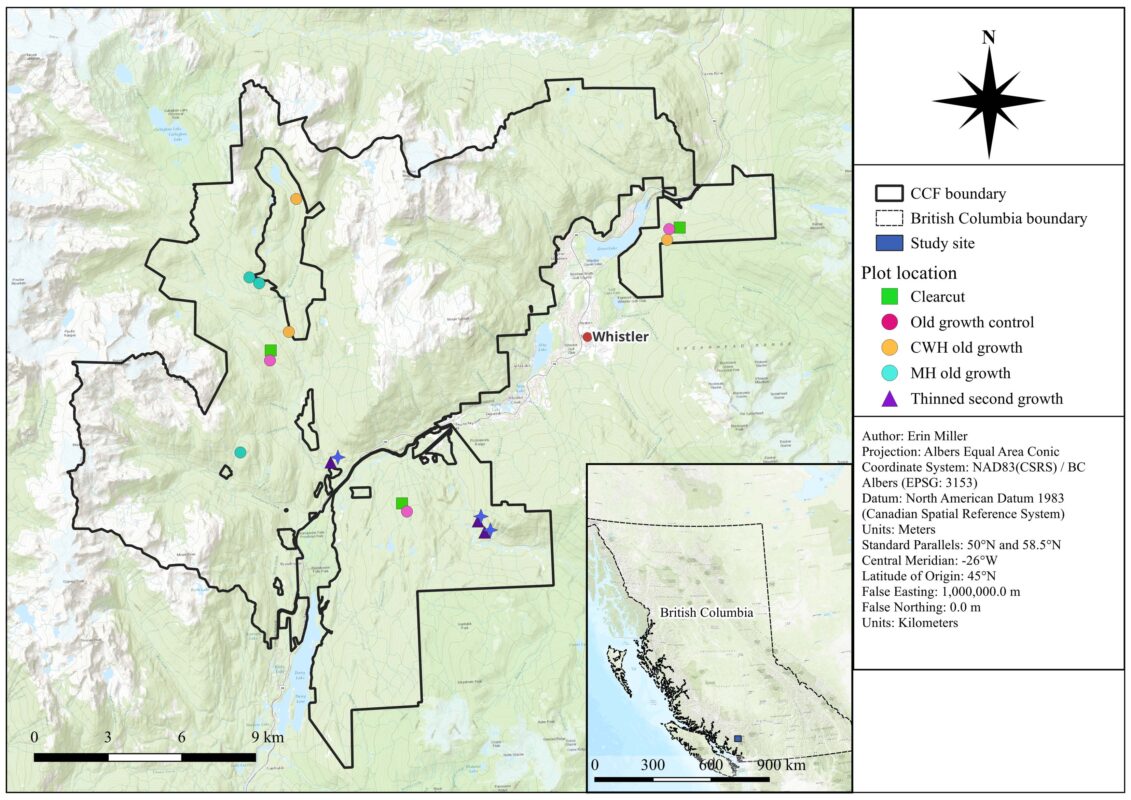
Some common methods for reducing the risk of wildfires impacting communities include reducing the volume of fuel available by thinning trees or removing adjacent forested area entirely (clearcutting). Both methods reduce the probability of a severe wildfire and improve the ability to respond effectively in the WUI. These methods may impact the health and integrity of the forest ecosystem, and these need to be better understood. The goal of this study was to document how thinning and patch clearcutting to reduce wildfire risk affects carbon stocks, stand structure, and biodiversity in the Cheakamus Community Forest near the community of Whistler, BC and in the territories of the Sḵwx̱wú7mesh Úxwumixw (Squamish Nation) and Lil̓wat7úl (Líl̓’wat Nation)This was done by conducting detailed field sampling and laboratory analysis to measure various ecological parameters, including plant and tree diversity and carbon stocks.
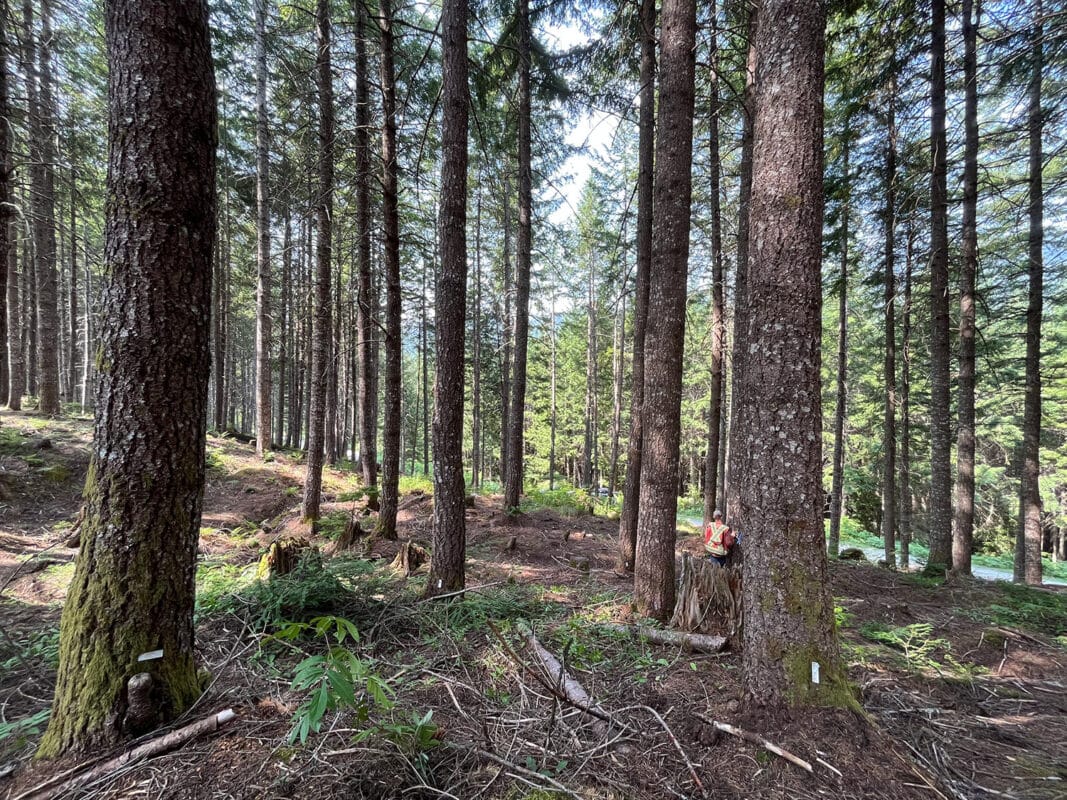
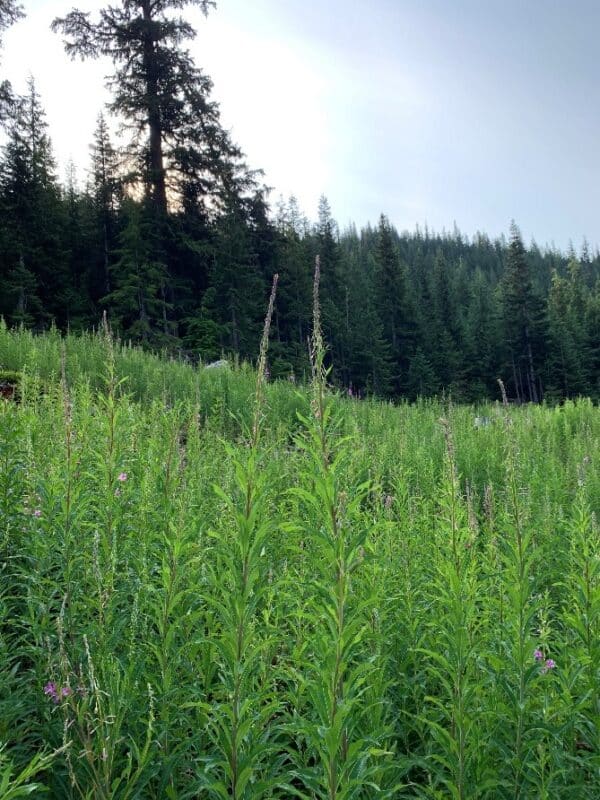
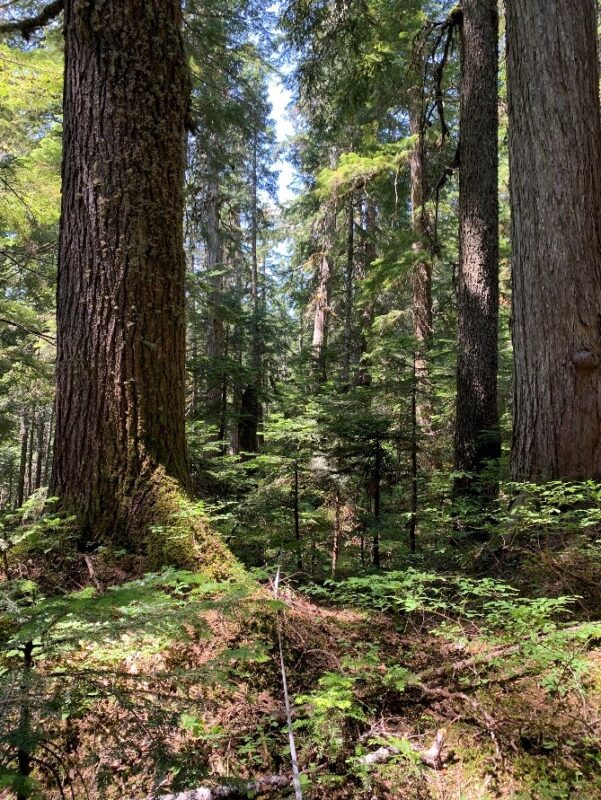
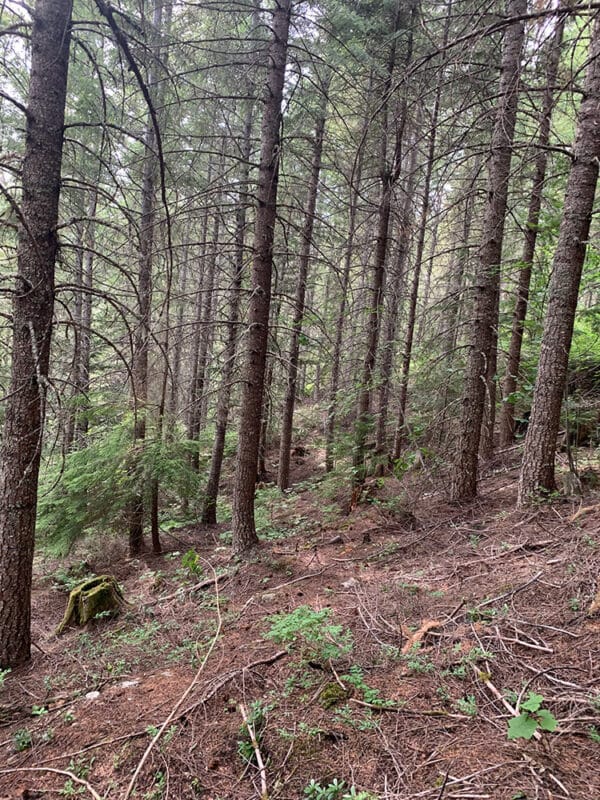
Photo credit: Mother Tree Project & Program
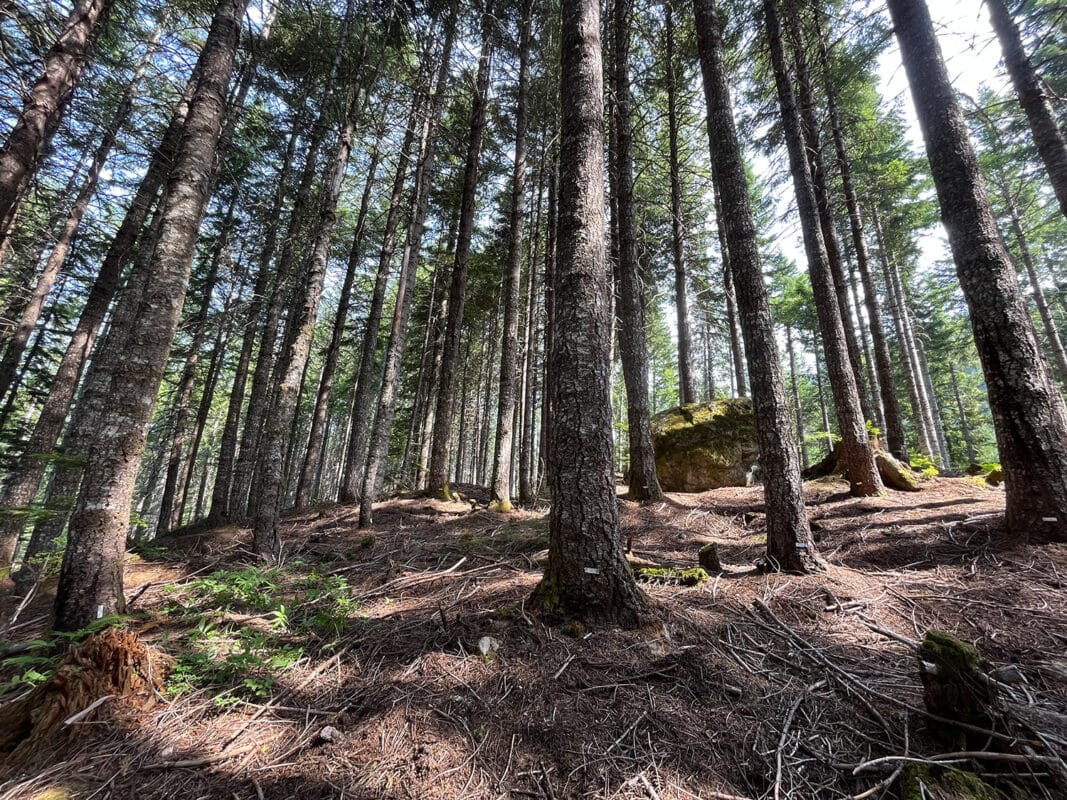
In the stands that were thinned, we found no significant reduction in total above- or belowground carbon stocks, indicating that fire hazard treatments did not adversely affect carbon stores. Thinning increased cover and number of plant species, improving plant diversity, when compared with the untreated control stands. However, the thinned areas had reduced tree diversity, leading to a dominance by Douglas-fir. Douglas-fir is a fire-resistant species and comprised the majority of larger trees in the second-growth stands, and this led to its prioritization for retention over other species. Such a reduction in overstory diversity can increase the risk of catastrophic losses from species-specific disturbances.
In the stands that were clearcut harvested, there was a significant decrease in total aboveground carbon stores, while the forest floor and the rest of the soil carbon were not significantly impacted. Due to the complete removal of the canopy, the structural complexity of these stands was simplified, thus reducing biodiversity and habitat availability.
The results from the study illustrate that fuel reduction treatments in the WUI, when done carefully, can protect ecosystems from wildfire risk and increase biodiversity.