


Photo credit: Mother Tree Project & Program
This research brief summarizes research findings from the peer-reviewed article published in June 2024 in Frontiers in Forests and Global Change.
Authors: W. Jean Roach, Suzanne W. Simard, and Eva N. Snyder.
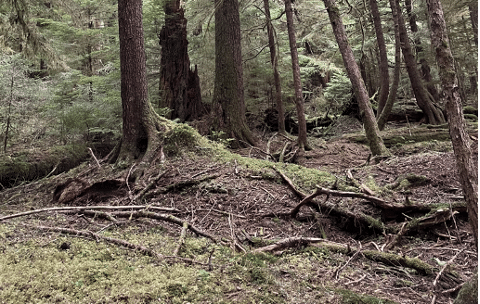
When walking through a forest, the large, standing trees are often the first thing we notice. It is easy to marvel at these giants, admiring their canopy, branches, and trunks as they tower over us without considering what is happening on the ground. When these trees fall, they continue to play a crucial role within the ecosystem. Downed woody debris plays a vital role in forest structure, nutrient and water cycling, biodiversity, and carbon storage. Despite the value that downed woody debris provides to the ecosystem and the need for established baselines in stands across different climatic regions, detailed inventories across a climate gradient are scarce. As climate change continues to influence forests across BC, and partial retention harvesting increases as an alternative to clearcutting, it is necessary that we understand how each factor interacts with and influences downed woody debris characteristics. By examining the effects of climate and harvesting treatments on the carbon storage, volume, and abundance of woody debris, comprehensive forest harvesting prescriptions that consider multiple ecological impacts can emerge.
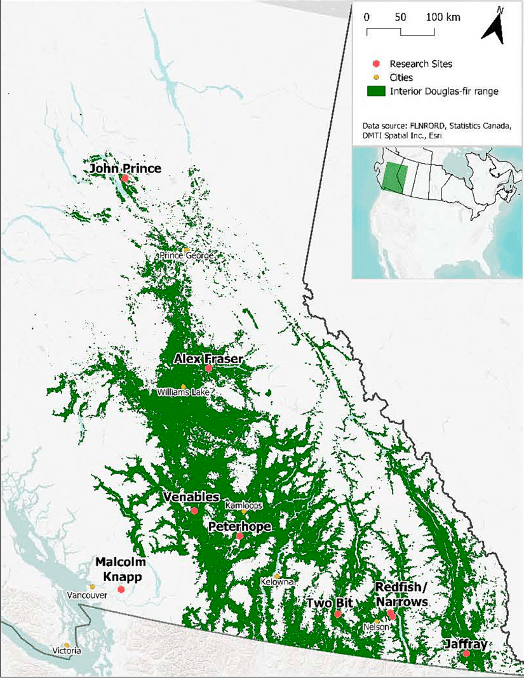
To determine how climate and harvesting impacts woody debris, this study examined downed woody debris of all sizes before and after five tree retention treatments were applied in nine different climatic regions across BC. While the sites varied in location, Douglas-fir (Pseudotsuga menziesii) was the dominant tree species in each mature (68-128 year-old) forest. The five harvesting treatments were clearcut, seed tree retention, small patch retention, large patch retention, and uncut, in which 0-100% of the trees were retained based on treatment type.
The study looked at woody debris of all sizes. This included coarse woody debris (CWD), which is aboveground woody pieces >7.5 cm in diameter, including logs, large branches, and fragments of wood. Small woody debris (SWD) is defined as fallen trees, branches, and fragments that are between 1-7.5 cm in diameter, while fine woody debris (FWD) is twig and wood fragments <1 cm in diameter. By examining all sizes, the ecological impacts of SWD and FWD were not excluded from the study, and a more accurate inventory was achieved.
It was found that CWD in humid climates contained 700% greater carbon stocks, had 500% greater volume, and was more diverse in size, decay class, and species type as compared to arid climates. In the majority of mature forests, more carbon was stored in CWD than SWD and FWD combined. Furthermore, harvesting decreased total CWD volume, reducing highly decomposed CWD at all but two sites. The loss of large CWD increased with harvesting intensity, likely due to equipment traffic that crushed large, decomposed pieces.
Harvesting also impacted SWD and FWD. The greatest increases in SWD were seen at sites with greater harvest intensity, and FWD increased after all harvesting treatments in arid and cool climates. FWD and SWD generally provide fewer ecological benefits than CWD but can still play a positive role in habitat provision and short-term nutrient supply. However, these small pieces ignite more readily than CWD and can contribute to the rapid spread of wildfires.
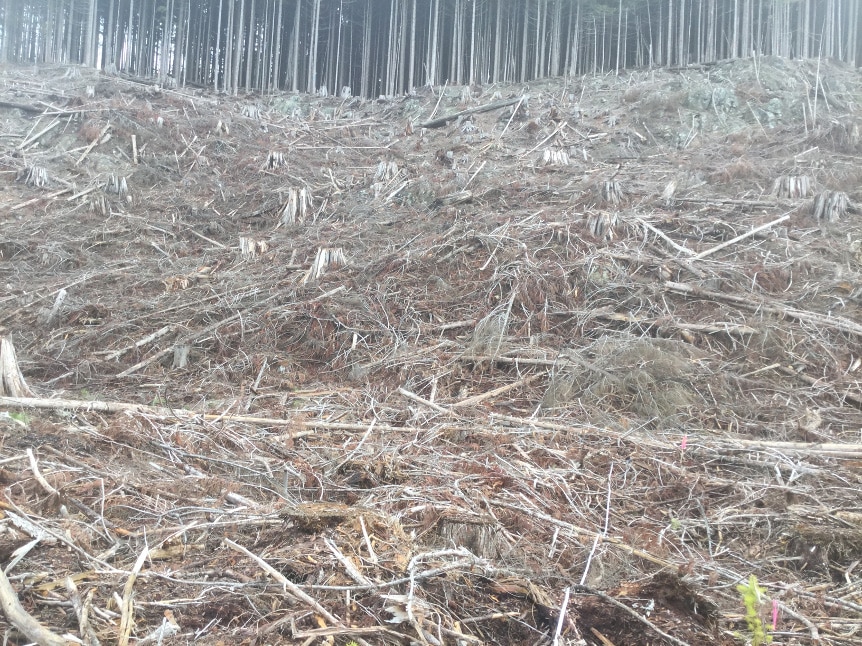
Small and fine woody debris one year following harvesting treatment. Photo credit: Mother Tree Project & Program.
Lastly, it was found that harvesting resulted in decreased diversity of downed woody debris at seven of nine climatic regions, suggesting an overall negative ecological impact of harvesting on diversity of organisms and ecological processes. Healthy forest ecosystems require a diversity of woody debris in order to support habitat, forest regeneration, nutrient cycling, soil health, and water retention. Therefore, it is essential to ensure that woody debris of all types are retained throughout the forest. This is especially important within the arid sites, where it was found that total debris stocks were much lower than at other sites. In these arid forests, care should be taken to avoid woody debris depletion in areas without legacy trees where future downed woody debris inputs would not occur for many decades. Management for short rotations risks a loss of large logs if legacy trees are not retained, which could have significant impacts on ecosystem health and functioning. Thus, management for a diversity of woody debris must begin when stands are young. By doing so, we can help protect the many essential ecological processes that woody debris plays a key role in.
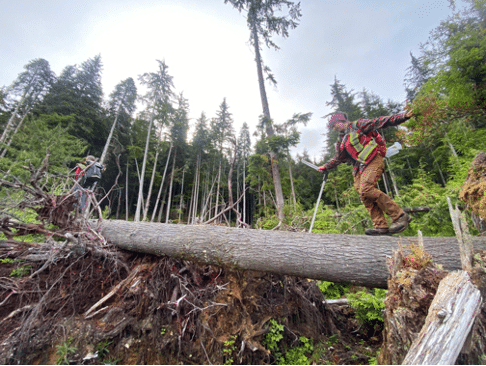
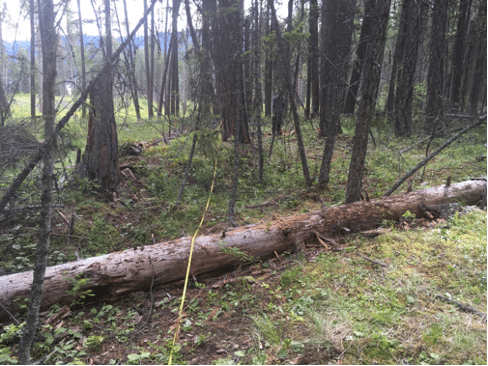
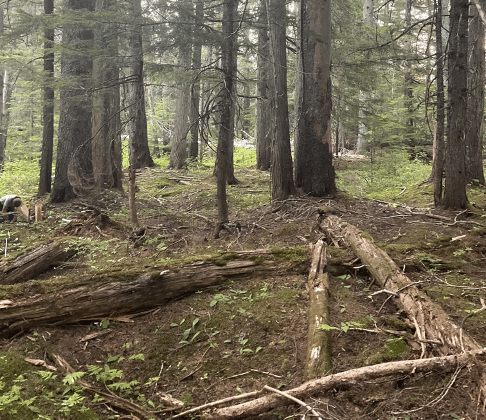
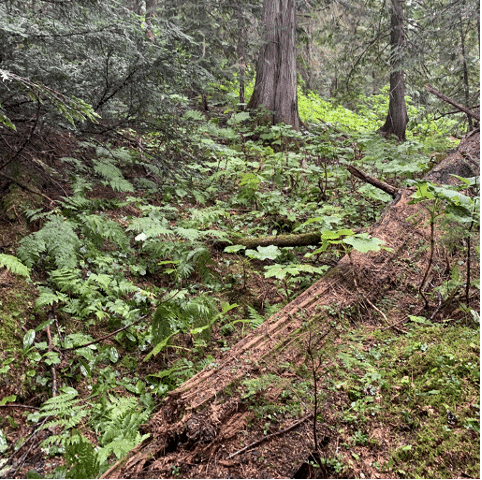
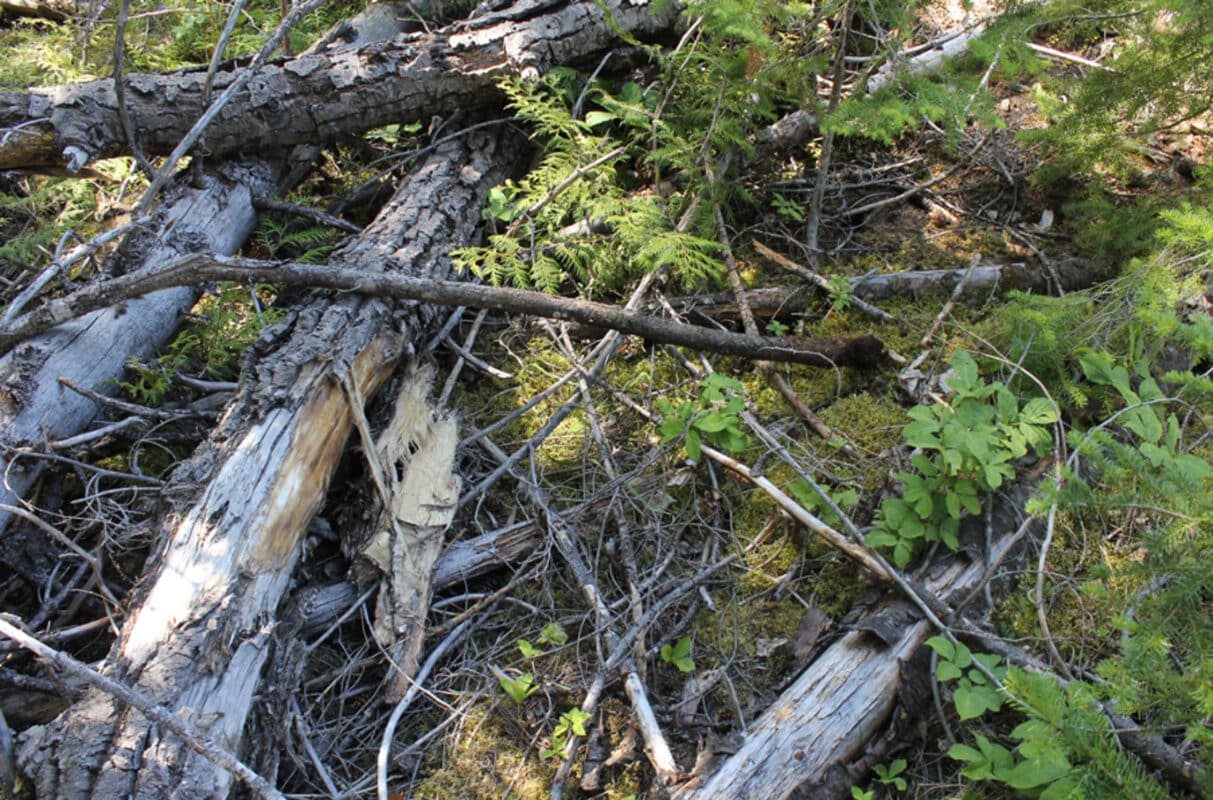
Images showing coarse woody debris at varied levels of decay. Photo credit: Mother Tree Project & Program.